- English
- Español
- Português
- русский
- Français
- 日本語
- Deutsch
- tiếng Việt
- Italiano
- Nederlands
- ภาษาไทย
- Polski
- 한국어
- Svenska
- magyar
- Malay
- বাংলা ভাষার
- Dansk
- Suomi
- हिन्दी
- Pilipino
- Türkçe
- Gaeilge
- العربية
- Indonesia
- Norsk
- تمل
- český
- ελληνικά
- український
- Javanese
- فارسی
- தமிழ்
- తెలుగు
- नेपाली
- Burmese
- български
- ລາວ
- Latine
- Қазақша
- Euskal
- Azərbaycan
- Slovenský jazyk
- Македонски
- Lietuvos
- Eesti Keel
- Română
- Slovenski
- मराठी
- Srpski језик

Why Choose a Fiber Laser Marking Machine for Industrial Applications?
Industrial Marking Guide
Article Summary
Manufacturers increasingly require permanent, accurate, and consistent product identification to improve traceability, quality control, and production efficiency. Traditional marking methods may involve consumables, additional processing steps, or inconsistent results. A fiber laser marking machine offers a modern solution by using a concentrated laser beam to create precise markings on suitable metal surfaces and selected non-metallic materials.
This article explains why fiber laser marking technology has become an important choice for industrial manufacturers, how it addresses common production challenges, what factors influence marking quality, and how buyers can select suitable equipment for their applications. It also explores maintenance requirements, operating costs, and practical purchasing considerations.
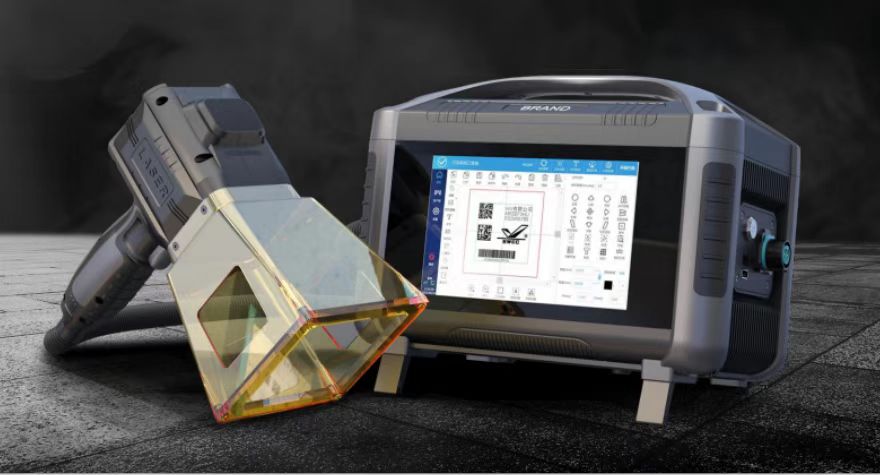
Table of Contents
- Why Is Fiber Laser Marking Technology Important?
- How Does a Fiber Laser Marking Machine Work?
- Which Production Problems Can It Solve?
- What Materials Can Be Marked?
- Why Does Marking Accuracy Matter?
- Which Industries Benefit from Fiber Laser Marking?
- How Does It Compare with Traditional Marking Methods?
- What Specifications Should Buyers Consider?
- How Can Businesses Reduce Operating Costs?
- What Maintenance Practices Improve Machine Life?
- How to Choose a Reliable Fiber Laser Marking Machine Supplier?
- Frequently Asked Questions
- Final Thoughts
1. Why Is Fiber Laser Marking Technology Important?
In modern manufacturing, product identification is no longer simply a way to display a brand name. It is an essential part of quality management, inventory control, product traceability, and customer confidence. Manufacturers need to mark serial numbers, QR codes, logos, production dates, specifications, and other identification information on individual components.
However, traditional marking methods can create several challenges. Ink-based printing requires consumables and may need frequent replenishment. Mechanical engraving can involve physical contact with the workpiece, while manual marking operations may produce inconsistent results between batches.
A Fiber Laser Marking Machine addresses many of these challenges through a non-contact marking process. It uses a focused laser beam to modify the surface of a material, producing text, patterns, graphics, and identification codes without requiring traditional printing ink or marking tools.
Its major advantages include:
- Permanent identification: Laser markings can remain readable throughout demanding industrial applications when appropriate parameters and materials are selected.
- High marking precision: Fine characters, detailed graphics, and small identification codes can be produced with suitable optical configurations.
- Reduced consumables: The marking process does not require conventional ink, ribbons, or mechanical engraving bits.
- Flexible production: Digital marking files make it easier to change product information and customize designs.
- Improved consistency: Repeatable parameter settings help manufacturers maintain uniform marking quality across production batches.
For manufacturers handling metal components, hardware products, electronic parts, and industrial accessories, these advantages can improve both production management and finished-product presentation.
2. How Does a Fiber Laser Marking Machine Work?
A fiber laser marking machine generates a laser beam through an optical fiber-based laser source. The beam is delivered through an optical system and directed onto the workpiece by a scanning head. Controlled laser energy interacts with the material surface to create the required marking.
Depending on the material, laser settings, and intended result, the process may involve surface oxidation, color changes, localized material removal, or other controlled surface modifications.
Main Components of the Equipment
- Fiber laser source: Generates the laser energy required for marking.
- Galvanometer scanning system: Directs the laser beam across the marking area according to the programmed design.
- F-theta lens: Focuses the laser beam onto the workpiece within the selected working field.
- Control system: Manages marking parameters, graphics, and machine operation.
- Working platform: Supports and positions the workpiece during marking.
- Cooling system: Helps maintain suitable operating temperatures, depending on the machine configuration.
How Does the Marking Process Take Place?
- Prepare the design: Import or create the required text, logo, serial number, or graphic in compatible software.
- Position the workpiece: Place the material in the appropriate marking position and establish the correct focus.
- Configure parameters: Adjust laser power, frequency, speed, and other relevant settings according to the material and marking requirements.
- Perform a test: Run a sample marking to evaluate contrast, clarity, and consistency.
- Start production: Apply the confirmed settings to the production batch and inspect the finished markings.
Practical Tip: The highest laser power does not automatically produce the best marking result. Material characteristics, focal position, scanning speed, frequency, and pulse settings all influence the final appearance.
3. Which Production Problems Can It Solve?
Industrial buyers usually evaluate marking equipment based on the problems it can solve rather than its technical specifications alone. A suitable fiber laser marking system can help address several common manufacturing difficulties.
Problem 1: Unclear or Inconsistent Product Identification
When serial numbers, logos, or product specifications are difficult to read, manufacturers may experience inspection difficulties, identification errors, and customer complaints. Laser marking provides a digitally controlled process that can produce clear and repeatable results when properly configured.
Problem 2: High Consumable Costs
Ink, ribbons, labels, and replacement marking tools can increase recurring production expenses. Fiber laser marking reduces dependence on these conventional consumables, although businesses should still consider electricity, cleaning, maintenance, and replacement components when calculating operating costs.
Problem 3: Slow Product Changeovers
Manufacturers producing different models or customer-specific components often need to update product information. With digital marking files, operators can change text, patterns, and identification codes without creating a new physical marking tool for every design.
Problem 4: Limited Traceability
Missing or inconsistent product identification can make it difficult to trace components during manufacturing, storage, and after-sales service. Laser-marked serial numbers, barcodes, and QR codes can support structured product tracking and identification systems.
Problem 5: Space and Equipment Limitations
Not every factory has sufficient space for large marking stations. Compact desktop and portable configurations can help manufacturers introduce laser marking into existing work areas. The appropriate configuration depends on workpiece dimensions, production volume, and operating requirements.
4. What Materials Can Be Marked?
Material compatibility is one of the most important considerations when purchasing a fiber laser marking machine. Fiber laser technology is particularly suitable for many metal materials, although certain non-metallic materials can also be processed depending on their composition and surface characteristics.
Common Metal Materials
- Stainless steel: Used for equipment nameplates, industrial components, kitchen hardware, and precision parts.
- Aluminum: Common in electronic housings, automotive components, and industrial accessories.
- Carbon steel and iron: Suitable for many mechanical parts, tools, and metal identification plates.
- Copper: Used in selected electrical components and metal products.
- Brass: Commonly found in fittings, decorative hardware, and industrial components.
- Metal alloys: Can be evaluated according to their specific composition and surface condition.
Selected Non-Metallic Materials
Some industrial plastics, rubber materials, ceramics, resins, leather, paper, and coated materials may also be marked under suitable conditions. However, not every non-metallic material is compatible with a standard fiber laser source.
For example, certain plastics require specific laser wavelengths or specialized processing parameters to achieve good contrast without excessive melting or surface damage. CO2 or UV laser systems may be more appropriate for particular applications.
| Material | Typical Application | Important Consideration |
|---|---|---|
| Stainless Steel | Serial numbers, logos, equipment plates | Surface finish and contrast requirements |
| Aluminum | Electronic housings, nameplates | Alloy type and surface coating |
| Carbon Steel | Tools, machinery parts | Desired marking depth and readability |
| Brass and Copper | Fittings, electrical components | Reflectivity and thermal characteristics |
| Industrial Plastics | Product identification and coding | Polymer composition and laser compatibility |
| Ceramics and Coated Materials | Labels and specialized components | Surface treatment and test results |
Before ordering equipment, buyers should provide the supplier with material samples, photographs, marking content, and desired marking results. Actual sample testing is the most reliable way to verify compatibility.
5. Why Does Marking Accuracy Matter?
For precision manufacturing, marking quality directly affects product identification and professional presentation. A poorly marked serial number may become difficult to scan or read, while inconsistent logos can reduce the visual quality of finished products.
Marking accuracy is influenced by several factors:
Laser Spot Size and Optical Configuration
The optical system determines how the laser beam is focused onto the workpiece. A suitable lens and focal configuration help produce detailed markings and maintain the required working area.
Marking Speed and Laser Power
High scanning speeds can improve productivity, but excessive speed may reduce marking contrast if the energy delivered to the material is insufficient. Conversely, excessive laser energy can cause unwanted surface changes.
Workpiece Positioning
Incorrect positioning or inconsistent focal distance can affect marking uniformity. Positioning fixtures and repeatable workpiece alignment are particularly valuable for batch production.
Graphic and Software Compatibility
Industrial marking often requires importing CAD drawings, logos, and vector graphics. Common supported formats may include AI, PLT, DXF, BMP, and other formats depending on the control software and machine configuration.
Buyer Recommendation: Do not evaluate marking accuracy only through advertised specifications. Request actual samples featuring your smallest text, most detailed logo, and most demanding identification code.
6. Which Industries Benefit from Fiber Laser Marking?
Because permanent product identification is important across numerous manufacturing sectors, fiber laser marking systems have a wide range of industrial applications.
Automotive and Motorcycle Manufacturing
Automotive suppliers use laser marking to identify metal components, engine parts, fasteners, brackets, and product identification plates. Serial numbers and other identification information can support component traceability and quality management.
Electronics and Electrical Equipment
Electronic manufacturers frequently need to mark small housings, metal connectors, electrical components, and product labels. Fine marking capabilities are useful when available space is limited.
Hardware and Metal Processing
Tools, bearings, valves, metal fittings, and machinery accessories often require company logos, model numbers, specifications, and batch codes. Fiber laser marking can support these requirements without traditional contact-based engraving.
Medical Equipment Manufacturing
Manufacturers of suitable medical equipment components may use permanent identification to support product management and traceability. Marking parameters and surface requirements must be evaluated according to the component material and applicable industry regulations.
Instrumentation and Precision Machinery
Measuring instruments, mechanical components, and industrial control equipment often require small, clear markings. Laser marking can provide detailed identification while maintaining a professional product appearance.
7. How Does It Compare with Traditional Marking Methods?
Choosing the right marking technology requires understanding the advantages and limitations of different processes. Fiber laser marking is not necessarily the best solution for every material or production environment, but it offers important benefits for many metal-marking applications.
| Comparison | Fiber Laser Marking | Traditional Methods |
|---|---|---|
| Marking Process | Non-contact laser processing | May involve contact or ink transfer |
| Consumables | No conventional marking ink or ribbon | May require ink, ribbons, or tools |
| Design Changes | Digital file adjustment | May require new tools or setup |
| Precision | Suitable for fine, detailed markings | Depends on the marking technology |
| Maintenance | Optical cleaning and system inspection | Varies with equipment and process |
| Material Compatibility | Excellent for many metals | Varies by process |
| Production Flexibility | High for changing digital content | Depends on tooling and workflow |
Inkjet printing may be preferable for certain packaging applications, while dot peen marking can be suitable when deep mechanical impressions are required. The best solution depends on the material, marking depth, production speed, and final product requirements.
8. What Specifications Should Buyers Consider?
Purchasing a fiber laser marking machine requires more than comparing prices and laser power. Buyers should evaluate the complete configuration to ensure that the equipment matches their actual production requirements.
Key Technical Parameters
| Specification | What Buyers Should Evaluate |
|---|---|
| Laser Power | Common options include 20W, 30W, 50W, and 100W. Select according to material and marking requirements. |
| Marking Area | Typical options include 100 × 100 mm, 200 × 200 mm, and 300 × 300 mm, depending on configuration. |
| Laser Source | Evaluate manufacturer, expected service life, and technical support. |
| Control Software | Check supported file formats, ease of operation, and design compatibility. |
| Cooling System | Confirm whether air cooling or another configuration is suitable for the application. |
| Machine Structure | Consider desktop, split, enclosed, portable, or automated configurations. |
| Safety Features | Evaluate enclosure, interlocks, protective measures, and applicable laser safety requirements. |
| Warranty and Support | Confirm warranty coverage, training, spare parts, and after-sales service. |
How Much Laser Power Is Necessary?
Different power levels serve different production requirements. A 20W or 30W system may be suitable for many standard marking applications, while 50W or 100W configurations may provide advantages for certain faster production tasks, deeper engraving requirements, or specific materials.
However, power alone does not determine production speed or marking quality. Buyers should compare actual sample results and consider the entire optical and control configuration.
Why Is Marking Area Important?
A larger marking field can accommodate larger workpieces or multiple components within one setup. However, the lens and optical configuration must be matched to the desired field size because changes in marking area can affect spot size and processing characteristics.
9. How Can Businesses Reduce Operating Costs?
Equipment investment should be evaluated through its total cost of ownership rather than its initial purchase price alone. A machine with a lower upfront cost may not always provide the best long-term value if it does not meet production requirements or requires frequent service.
Businesses can improve cost efficiency through the following practices:
- Choose suitable laser power: Avoid purchasing an unnecessarily high-power configuration when a lower-power model meets the application.
- Optimize marking parameters: Test suitable combinations of speed, power, and frequency to reduce unnecessary processing time.
- Improve batch organization: Arrange production orders to reduce repeated setup and design changes.
- Use appropriate fixtures: Consistent positioning reduces operator adjustment and marking errors.
- Maintain optical cleanliness: Proper cleaning helps prevent contamination-related performance problems.
- Train operators: Correct operation reduces avoidable mistakes and equipment downtime.
Calculate the Total Investment
Before purchasing, manufacturers should consider:
- Initial machine and accessory costs.
- Installation and operator training.
- Electricity consumption.
- Routine inspection and maintenance.
- Replacement parts and potential repair expenses.
- Production output and labor savings.
Comparing these factors with existing marking costs provides a more realistic picture of the investment's potential return.
10. What Maintenance Practices Improve Machine Life?
Fiber laser marking systems generally have fewer routine consumable requirements than many traditional marking technologies. Nevertheless, proper maintenance remains essential for stable operation and consistent marking quality.
Daily Maintenance
- Inspect the machine exterior and working area before operation.
- Keep the worktable clean and free from unnecessary debris.
- Check cables, connectors, and visible machine components.
- Confirm that the protective devices and safety interlocks function correctly.
Regular Maintenance
- Clean optical components according to the manufacturer's instructions.
- Inspect the scanning head and lens for contamination or damage.
- Check electrical connections and cooling conditions.
- Back up important marking files and machine settings.
- Review marking consistency and investigate unusual changes.
Why Is Proper Laser Safety Important?
Industrial fiber lasers commonly operate at wavelengths that can cause serious eye and skin injuries. Invisible laser radiation is particularly hazardous because operators may not recognize exposure immediately.
Businesses should use equipment with appropriate protective enclosures, interlocks, warning indicators, and safety systems. Open-beam configurations require suitable controlled work areas and wavelength-appropriate protective eyewear. Operators should receive proper laser safety training, and reflective materials must be handled with appropriate precautions.
11. How to Choose a Reliable Fiber Laser Marking Machine Supplier?
Choosing an equipment supplier is an important part of the purchasing process. A reliable supplier should provide more than a machine quotation. Buyers also need technical guidance, application evaluation, configuration recommendations, and dependable after-sales support.
Evaluate Manufacturing and Technical Experience
Look for suppliers with experience in laser marking equipment and industrial identification applications. A supplier's engineering capabilities can be particularly important when standard equipment needs to be adapted to specific workpieces or production processes.
Request Real Marking Samples
Before confirming an order, provide representative materials and marking designs. Ask the supplier to demonstrate:
- Small text and fine-line marking.
- Company logos and detailed graphics.
- Serial numbers and identification codes.
- Marking consistency across multiple samples.
- Processing results on the actual material.
Check Customization Capabilities
Different factories have different production requirements. Some need a desktop marking station, while others require portable equipment, rotary marking functions, or integration with an existing production line.
Customization may involve the machine structure, working area, software functions, fixtures, and other accessories. Buyers should confirm the technical feasibility and additional costs before ordering.
Consider Technical Training and After-Sales Service
Clear operating instructions, remote technical assistance, spare parts availability, and warranty coverage can help reduce potential downtime. International buyers should also confirm communication channels, delivery arrangements, and the support process before making a purchasing decision.
About Luyue
Jinan Luyue CNC Equipment Co., Ltd. specializes in the research, development, and manufacturing of laser, pneumatic, and electric marking equipment. Its product range includes fiber laser marking machines, dot peen marking machines, and other industrial marking solutions.
With experience serving applications in automotive and motorcycle parts, hardware, machinery accessories, instrumentation, electrical equipment, and other industries, Luyue provides equipment options for different industrial identification requirements.
For buyers with specific workpiece dimensions, marking content, or production requirements, discussing the application with the technical team is a practical first step toward selecting a suitable machine.
12. Frequently Asked Questions
Q1: What is a fiber laser marking machine mainly used for?
A fiber laser marking machine is mainly used to create permanent identification marks on metal products and selected other materials. Common applications include serial numbers, logos, QR codes, barcodes, product specifications, and industrial traceability information.
Q2: Can a fiber laser marking machine mark stainless steel?
Yes. Stainless steel is one of the common materials processed by fiber laser marking systems. Depending on the surface finish and parameter settings, the machine can create clear text, patterns, and identification marks.
Q3: Can fiber laser marking machines process plastic?
Some industrial plastics can be marked with fiber lasers, but compatibility depends on the polymer composition, additives, and surface characteristics. Certain plastics may require CO2 or UV laser technology instead. Sample testing is recommended.
Q4: What is the difference between laser marking and laser engraving?
Laser marking generally refers to modifying the material surface to create visible identification, while laser engraving usually involves removing material to create a more noticeable recess. The actual depth and appearance depend on the material and processing parameters.
Q5: How do I choose between 20W, 30W, 50W, and 100W laser power?
The appropriate power depends on material type, marking speed, required depth, and production volume. Buyers should provide actual samples and marking requirements so that the supplier can recommend a suitable configuration.
Q6: Does a fiber laser marking machine require ink or other consumables?
No conventional marking ink, ribbon, or engraving bit is needed for the laser marking process. However, the machine still requires electricity, routine maintenance, and possible replacement of components over its service life.
Q7: Can a fiber laser marking machine mark curved metal surfaces?
Yes, certain curved or cylindrical workpieces can be processed using compatible rotary attachments or specialized configurations. The machine setup should be selected according to the workpiece shape, dimensions, and marking position.
Q8: Is a fiber laser marking machine suitable for small factories?
Yes. Compact desktop and portable models can be suitable for small and medium-sized manufacturers. Buyers should consider available workspace, production volume, material compatibility, and the required marking area.
Q9: What information should I provide when requesting a quotation?
It is helpful to provide the material type, workpiece dimensions, marking content, desired marking area, production quantity, required marking depth, and preferred machine configuration. Sample images or physical workpieces can help the supplier provide more accurate recommendations.
Q10: Can the fiber laser marking machine be customized?
Depending on the equipment model and application, customization may include marking area, machine structure, fixtures, rotary functions, software requirements, and other accessories. Discussing the technical details with the manufacturer helps establish a suitable solution.
13. Final Thoughts: Make Product Identification More Efficient
Reliable product identification plays an increasingly important role in modern manufacturing. From metal components and automotive parts to electronic products and industrial hardware, manufacturers need marking solutions that deliver clear results, consistent performance, and flexible production capabilities.
A Fiber Laser Marking Machine can help businesses reduce dependence on conventional marking consumables, improve marking consistency, simplify design changes, and support product traceability. However, the best equipment is not necessarily the one with the highest power or the lowest price. It is the machine that matches the material, marking requirements, production environment, and long-term operating objectives.
Jinan Luyue CNC Equipment Co., Ltd. provides industrial marking equipment and customization options for different manufacturing applications. Whether you need a desktop fiber laser marking machine, a portable solution, or equipment configured for specific workpieces, selecting the right system starts with understanding your actual production needs.
Looking for a Suitable Fiber Laser Marking Machine?
Are you planning to improve metal marking quality, simplify product identification, or upgrade your existing production process? Contact the Luyue team to discuss your materials, marking requirements, and equipment preferences.
Send us your product photos, sample drawings, or marking specifications. Our team can help evaluate your application and recommend a suitable fiber laser marking solution.
Contact us today to request product details, technical assistance, and a quotation from Jinan Luyue CNC Equipment Co., Ltd.
Contact Us for a Quotation